You may know that there are different types of breast implants, but knowing the difference between the two and how they affect your breast augmentation is important for planning your procedure. What you may think is a better choice for you may not be the best choice for your anatomy. This blog discusses the differences between saline and silicone breast implants, the safety of both options, and the risks associated with them.
See the Difference: Breast Augmentation Before and After Photos
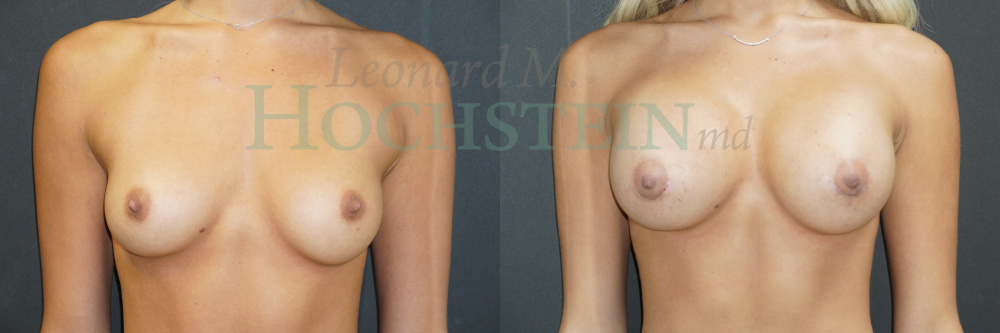
[See More Breast Augmentation Photos]
Types of Breast Implants: Saline vs. Silicone
There are two types of breast implants: saline and silicone implants. Each consists of a solid outer silicone shell and a filling, giving the breast a different look.
Saline Implants
Saline implants are filled with salt water through a valve once they are inserted into the breast pocket. These do not look and feel as natural as silicone implants, but rather give a more augmented look. These types of implants are available for women aged 18 and older and are best for patients with less natural breast tissue and thin skin.
Silicone Implants
Silicone implants are pre-filled with a cohesive silicone gel and do not require filling through a valve. Silicone implants tend to have a softer look and feel, meaning it closely mimics the feel of natural breast tissue, especially for patients with thinner breast tissue. This is especially a good choice for older women.
These implants are FDA-approved for women aged 22 and older. Patients under 22 may still be candidates in certain cases, but silicone implants would not be FDA-approved for that age group and are not covered by a warranty.
Breast Implant Safety and Risks
Both silicone and saline implants come with different risks. However, all breast augmentation cosmetic surgeries can have the following risks:
- Anesthesia risks
- Infection
- Changes to breast sensation (temporary or permanent)
- Hematoma
- Prolonged healing
- Scarring
- Implant rupture
- Capsular contracture
- Implant displacement/visible rippling
- Double bubble deformity
Even with the safest procedure and careful follow-up of your post-operative instructions, complications can occur. To ensure that any complications are addressed, each breast implant surgery is covered by the Sientra Platinum20™ Product Replacement and Limited Warranty Program.
Silicone Implants
A silicone implant rupture is usually “silent,” as the thickened silicone can give the illusion that it’s still in its shell. You may not even know that your implant has ruptured, so the FDA recommends getting MRI or ultrasound screenings regularly after your surgery to monitor your implant.
Saline Implants
When a saline implant ruptures, the breast implant will deflate, changing the shape of the breast. You will need to get a replacement implant. Because it is filled with a saline solution, the body will absorb it, so the only risk that comes with a rupture is cosmetic.
Regardless of which implant you get, it’s important to reach out to your surgeon if you feel any pain or discomfort once you’ve fully healed, in case your implant has ruptured.
How Do I Determine What Breast Implant Is Right for Me?
The best way to determine the implant that’s right for you is through consultation with your surgeon.
You need an experienced eye to analyze your anatomy and consider what would look best for you. It’s also important to come prepared with references and a clear idea of your aesthetic goals and desired results.
Schedule Your Breast Augmentation Consultation Today – Miami, FL
While complications can occur, with the proper help and care, a breast augmentation is perfectly safe.
A breast implant procedure requires the most qualified surgeon to put your trust in. Known as “The Boob God,” board-certified plastic surgeon Dr. Leonard Hochstein has performed thousands of breast augmentation procedures.
To schedule your consultation, call (305) 931-3338 or fill out our online contact form.